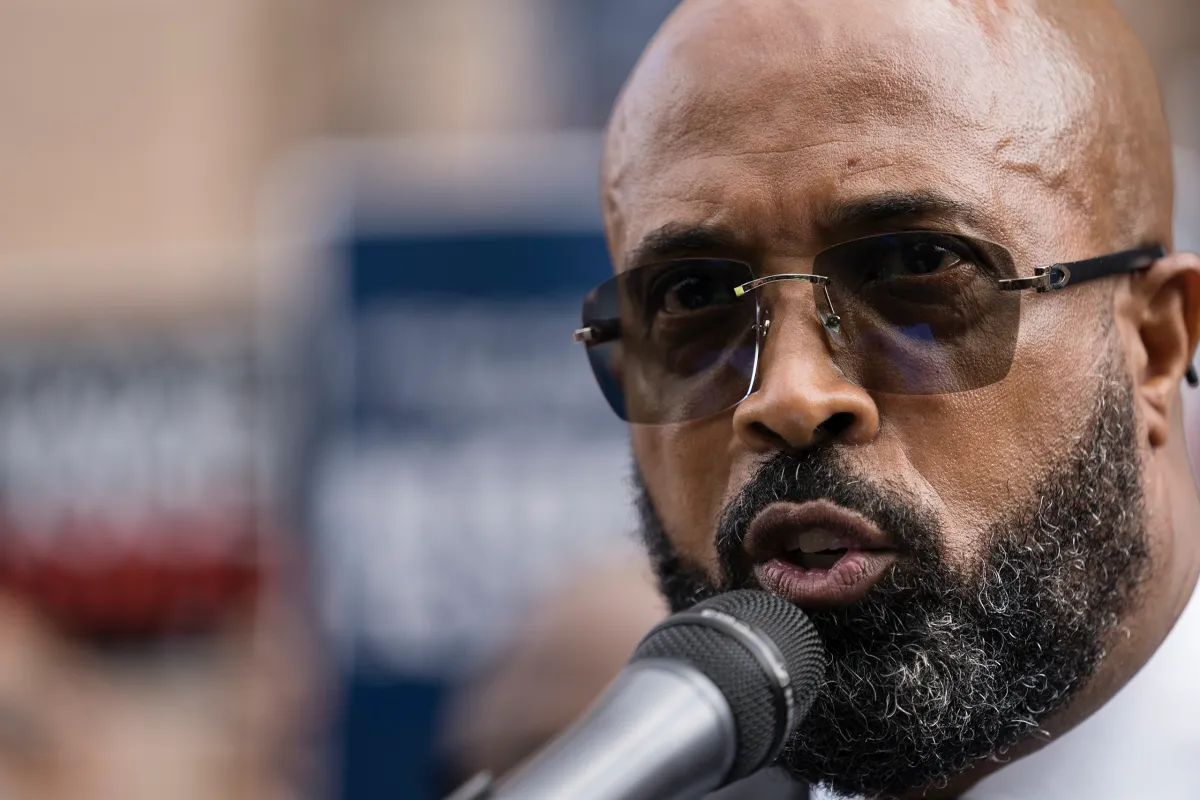
From the Pulpit to Congress: Dallas Pastor Frederick D. Haynes III Wins Historic Congressional Race
Longtime religious leader and civil rights advocate prepares to bring decades of community leadership to Washington.
DALLAS, TEXAS — November 2026
For decades, Dr. Frederick Douglass Haynes III has been recognized as one of the nation's influential Black church leaders, using his pulpit to address matters of faith, social justice, economic empowerment, and civil rights.
Now, the longtime senior pastor of Friendship-West Baptist Church in Dallas is preparing to carry that commitment into the halls of the United States Congress.
Haynes, a Democrat, won the November 3, 2026, election for Texas' 30th Congressional District, defeating Republican Everett Jackson and securing a seat previously held by U.S. Rep. Jasmine Crockett.
His victory represents a significant transition for a minister whose leadership has extended well beyond the walls of the church.
A Pastor With a History of Community Advocacy
Haynes has spent decades building a ministry that combines biblical preaching with community development and social activism.
Under his leadership, Friendship-West Baptist Church has grown into a major Dallas congregation with more than 13,000 members.
His ministry has frequently addressed challenges affecting African American communities, including economic inequality, access to opportunity, racial injustice, and voting rights.
For Haynes, the relationship between Christian faith and public responsibility has long been central to his work.
His election to Congress now places him in a position to address many of those same concerns through federal legislation and public policy.
Continuing Democratic Representation in District 30
Haynes will succeed Jasmine Crockett, who represented the district beginning in January 2023 before leaving the House race to pursue a seat in the U.S. Senate.
The 30th Congressional District, which includes much of southern Dallas County and a portion of Tarrant County, has historically supported Democratic candidates.
The district's boundaries were also revised during the redistricting process preceding the 2026 midterm elections.
Haynes entered the race with considerable name recognition and longstanding relationships throughout the Dallas community.
During his campaign, he highlighted economic opportunities, voting rights protections, and criminal justice reform as major priorities.
His Republican opponent, Everett Jackson, supported reductions in federal spending and stronger national security policies. Jackson also criticized Crockett's record during the campaign.
Ultimately, voters chose Haynes to represent the district in Washington.
A New Chapter for Black Church Leadership
Haynes' election adds another chapter to the long relationship between African American religious leadership and American political life.
Throughout history, the Black Church has produced influential voices whose work extended beyond Sunday worship into education, public service, civil rights, and government.
Leaders such as Adam Clayton Powell Jr., who served as both a pastor and a member of Congress, demonstrated how religious and political responsibilities could intersect.
Haynes now enters that tradition as a first-time federal lawmaker.
His election also raises a familiar question within religious communities: What role should pastors and religious leaders play in shaping public policy?
For some, the movement from ministry into elected office represents a natural extension of the church's historic commitment to social justice and community advancement. Others believe ministers must carefully balance their spiritual responsibilities with the demands and compromises of partisan politics.
Those discussions will likely continue as Haynes begins his congressional service.
From Preaching Change to Legislating Change
Winning an election is only the beginning of the transition Haynes now faces.
As a member of Congress, he will move from advocating for policies and community concerns to participating directly in the legislative process.
His effectiveness will depend not only on the relationships he has developed in Dallas but also on his ability to build partnerships, negotiate legislation, and represent the diverse interests of his congressional district.
For the Black Church, his victory provides another example of