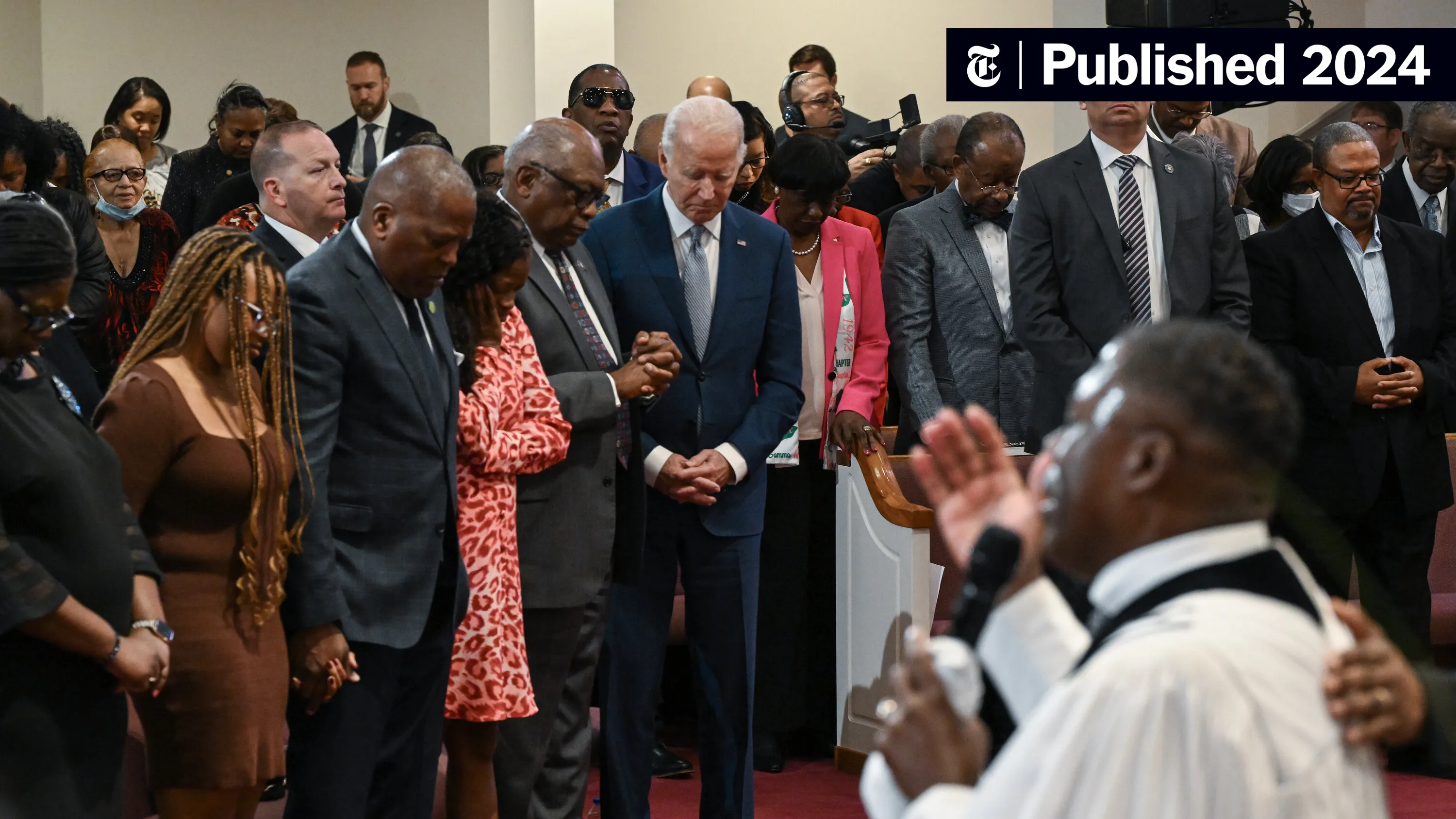
Faith, Politics & the Black Church | November 2026
The 2026 midterm elections revealed more than a political shift in Washington. They highlighted a longstanding division within American Christianity, particularly between the Black Church and white evangelical Christians.
While many Black Christians welcomed the election results with renewed optimism, numerous conservative evangelical leaders expressed disappointment and concern about the nation's political and moral direction.
The contrast raises an important question: How can Christian communities that share belief in Jesus Christ, the authority of Scripture, and the importance of faith arrive at such different political conclusions?
A Divided Religious Electorate
The November 3 elections delivered significant victories for Democrats, who secured control of both the U.S. House and Senate. In Texas, Democrat James Talarico's election to the U.S. Senate represented a particularly notable change in a traditionally Republican state.
But the differences between Black and white Christian voters were visible well before Election Day.
An October 2026 Pew Research Center survey found that 73% of registered white evangelical Protestant voters preferred Republican congressional candidates, while 74% of Black Protestant registered voters favored Democrats.
These figures reveal a considerable political divide among communities that frequently share similar religious traditions.
Why the Black Church Sees Politics Differently
To understand the Black Church's political perspective, one must consider its history.
For generations, African American congregations have served as more than places of worship. They have been centers of education, community leadership, economic support, and the struggle for civil rights.
From the abolitionist movement through the civil rights era, Black churches have frequently viewed political participation as an extension of their commitment to justice, dignity, and equal opportunity.
Consequently, many Black Christian voters evaluate political candidates through a broad range of concerns, including voting rights, racial equality, economic opportunity, healthcare, education, and the treatment of marginalized communities.
This does not mean Black Christians are universally liberal or that they agree on every political issue. Many maintain traditional positions on marriage, sexuality, and other moral questions while supporting candidates whose broader policy positions they believe better address the needs of their communities.
White Evangelicals Express a Different Set of Concerns
For many white evangelical Christians, the election results produced significant anxiety about the future direction of the country.
Prominent conservative religious leaders expressed concern over abortion, religious liberty, marriage, gender identity, and what they consider the growing influence of secular values in American government.
For these Christians, electoral outcomes are often viewed through the lens of preserving longstanding religious and moral principles.
Yet some conservative evangelical leaders also emphasized that the church's mission must continue regardless of which political party controls Washington.
Their message was that the responsibility to preach the gospel, make disciples, and serve communities does not change following an election.
Shared Beliefs, Different Experiences
Southern Baptist pastor Dwight McKissic has drawn attention to the differences between Black and white evangelical responses to the elections.
His observations point toward an important reality: theological agreement does not necessarily produce political agreement.
Two Christians may hold similar convictions about the Bible while reaching very different conclusions about government, leadership, and public policy.
History and lived experience contribute to those differences.
For many Black Christians, questions of justice, discrimination, and political representation remain deeply connected to their understanding of the church's responsibility in society.
For many white evangelicals, protecting religious freedom and traditional moral standards remains central to their political engagement.
Neither group is entirely uniform, and neither perspective represents every person within its community.
The Challenge Facing America's Pastors
Perhaps the greatest lesson from the 2026 elections is not simply how Christians voted, but how the church responds when political differences threaten Christian fellowship.
Pastors must navigate increasingly complicated questions about faith, public policy, and political identity.
The challenge is to address moral and social issues without allowing political parties to become substitutes for biblical conviction.
The Black Church's history demonstrates that Christian faith can inspire engagement with the pressing problems of society. At the same time, the broader evangelical tradition reminds believers that the church's ultimate mission extends beyond electoral politics.
Both perspectives raise questions worthy of serious reflection.
Can Christians disagree politically without questioning one another's salvation? Can congregations engage important social issues without becoming instruments of a political party? And can the church speak with moral clarity while extending grace to those who see the world differently?
Beyond the Ballot Box
The elections may be over, but the underlying divisions within American Christianity remain.
For the Black Church, the coming years present an opportunity to continue its historic work of advocating for justice, strengthening communities, and encouraging civic participation.
For white evangelical congregations, the results invite reflection about the relationship between religious conviction, political influence, and the church's public witness.
Ultimately, neither political victory nor political defeat defines the mission of the Christian church.
The real test of the church's influence will not be found only in how its members vote, but in how faithfully they serve their communities, demonstrate the love of Christ, and uphold their convictions after the elections have passed.
One nation. One shared Christian heritage. Yet two very different political perspectives.
The challenge ahead is whether those differences will deepen division or encourage a more meaningful conversation about faith, justice, and the future of the American church.